– Over 500 species of fish
– Vibrant coral gardens
– Encounter with endangered sea turtles
Introduction to Maratua Reef Life
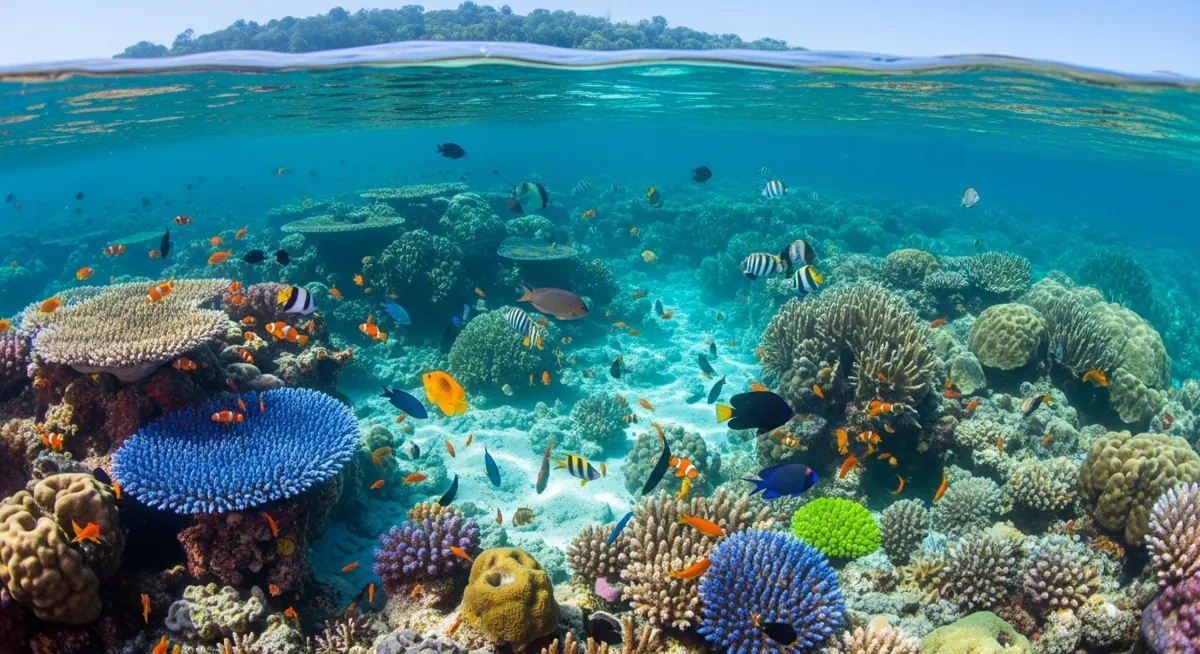
Maratua, part of the Derawan Islands in East Kalimantan, Indonesia, is a diver’s sanctuary. The underwater life here is diverse, with vibrant coral reefs serving as home to numerous species. From colorful fish to majestic sea turtles, Maratua’s underwater world is a treasure waiting to be explored.
Coral Reefs of Maratua
The coral reefs surrounding Maratua Island are among the most pristine in Indonesia. These reefs, formed over thousands of years, provide essential habitats for marine life. The coral formations are varied, ranging from hard corals to soft corals, creating a rich mosaic of colors and shapes.
Key coral species you may encounter include:
- Acropora (table corals)
- Porites (massive corals)
- Soft corals like Xenia and Dendronephthya
Diverse Marine Life
The marine biodiversity in Maratua is staggering, with over 500 species of fish recorded. This diversity is supported by the coral reefs, which serve as breeding and feeding grounds.
Common Fish Species
Diving in Maratua, you will likely see various fish species, including:
- Clownfish
- Parrotfish
- Wrasses
- Triggerfish
- Damselfish
Among these species, the clownfish is particularly popular due to its vibrant colors and symbiotic relationship with anemones. The parrotfish, known for its beak-like jaws, plays a crucial role in maintaining the health of the reef by grazing on algae.
Pelagic Species
In addition to reef fish, Maratua is also frequented by pelagic species. Divers may encounter:
- Sharks (including reef sharks)
- Jacks
- Manta rays
Sharks are vital for the balance of marine ecosystems. Their presence indicates a healthy reef. Manta rays, known for their graceful movements, can sometimes be seen gliding through the water, adding an element of excitement to your dive.
Special Encounters
Maratua is also known for its unique marine encounters. Among the highlights are the various species of sea turtles. The waters around Maratua are a nesting ground for several species, including the Green Sea Turtle and the Hawksbill Turtle.
Sea Turtles
Seeing a sea turtle in its natural habitat is a highlight for many divers. These ancient mariners can often be spotted swimming gracefully among the coral. Their presence is a sign of the health of the marine environment, as they require clean waters and abundant food sources.
Seasonal Dive Highlights
The diving conditions in Maratua vary throughout the year. The best months for diving are generally from March to November, when visibility can reach up to 30 meters. During this period, the water temperature ranges from 27°C to 30°C (81°F to 86°F), making it comfortable for divers.
Key seasonal highlights include:
- March to May: Ideal conditions for spotting larger pelagic species.
- June to August: Peak season for manta ray sightings.
- September to November: Great visibility and abundant marine life.
Conservation Efforts
With the increasing popularity of diving in Maratua, conservation efforts are crucial to protect its delicate ecosystems. Local organizations work tirelessly to preserve the reefs and marine life. Divers are encouraged to follow responsible diving practices to minimize their impact.
Responsible Diving Practices
To ensure the preservation of Maratua’s reef life, divers should adhere to these practices:
- Avoid touching or stepping on coral.
- Do not collect marine life or souvenirs.
- Use reef-safe sunscreen to protect the marine environment.
Liveaboard and Diving Options
For those looking to fully immerse themselves in the diving experience, Maratua offers a range of liveaboard options. These vessels allow divers to explore multiple dive sites, maximizing their time underwater. Prices for liveaboard trips can vary, typically ranging from $300 to $800 for a multi-day package, depending on the level of luxury and inclusions.
For more information on dive trips and packages, visit our maratua Diving Pricing & Cost Guide guide.
Diving in the Derawan Islands
The Derawan Islands, of which Maratua is a part, offer a wide range of diving opportunities beyond Maratua itself. Sangalaki Island, located about 25 kilometers from Maratua, is renowned for its manta ray dives. Here, divers can experience close encounters with these gentle giants from March to May, with dive trips costing around $150 per day.
Kakaban Island, approximately 15 kilometers from Maratua, features the famous Jellyfish Lake, where non-stinging jellyfish offer a unique snorkeling experience. Visiting this lake requires a small entrance fee of about $10 USD, and the island can be reached via a short boat ride from Maratua.
Exploring East Kalimantan by Sea
For those looking to expand their diving adventures, East Kalimantan offers additional diving destinations such as the Mahakam Delta and the Bunyu Island. The Mahakam Delta, located around 200 kilometers from Maratua, is accessible by a scenic boat journey, providing a chance to see the unique riverine ecosystems and mangrove forests.
Bunyu Island, situated to the north of Maratua, is less frequented by tourists but offers pristine dive sites with rich marine biodiversity. A day trip to Bunyu, including diving, typically costs around $100, and arrangements can be made through local dive operators in Maratua.
Travel Logistics and Practical Information
Reaching Maratua Island is an adventure in itself. The nearest airport is in Berau, East Kalimantan, approximately 120 kilometers away. From there, travelers can take a taxi to Tanjung Batu, followed by a speedboat to Maratua, which costs around $30 to $50 per person. The journey takes about 3 to 4 hours in total.
Accommodation on Maratua ranges from budget-friendly homestays to more luxurious resorts, with prices starting at approximately $50 per night. Booking in advance is recommended, especially during the peak diving season from June to August.
Responsible Diving Practices in Maratua
When diving in Maratua, it’s crucial to adhere to responsible diving practices to protect the vibrant marine ecosystems. Avoid touching or disturbing the coral and marine life, as even a slight contact can cause damage. Ensure that your equipment is secure and that you maintain buoyancy control to prevent accidental harm to the reefs. Engaging in environmentally friendly behaviors helps preserve the underwater beauty for future visitors.
Planning specifics? See explore the options or book Maratua Diving.